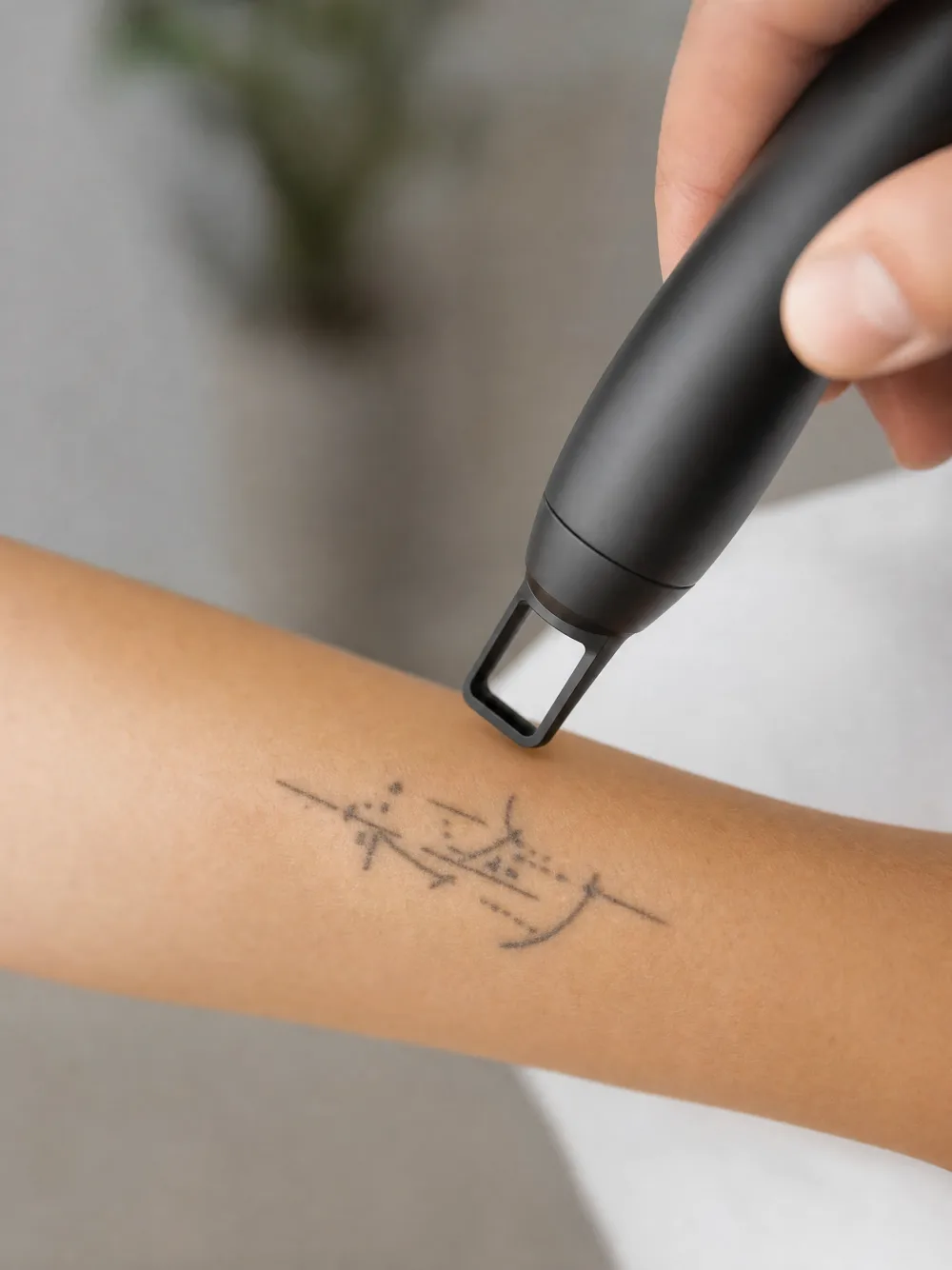
A technology-led aesthetic option for anyone who wants to consider the appearance of an existing tattoo and discuss the possibilities calmly.
What it is
Usually sought to fade a tattoo the person no longer wants to keep, either to reduce its visibility or to prepare it for a cover-up with a different design. At Anaël, Tattoo Removal is approached as one considered part of a wider care routine.
Common goals
Usually sought to fade a tattoo the person no longer wants to keep, either to reduce its visibility or to prepare it for a cover-up with a different design.
Who it may suit
Anyone who wants to fade or reduce an existing tattoo and understands this is a gradual process, always assessed individually during the prior consultation.
Treatment areas
The area where the tattoo to be treated is located, assessed individually based on its position and characteristics.
What a typical appointment looks like
Before starting, there is time to discuss your goal, consider the area, and answer questions. The team explains where this option may fit within your aesthetic care.
What you might feel
The sensation depends on the type of device and the area treated; many people describe it as a small pinch or a brief flash of heat, similar to the snap of a rubber band. The team walks you through what to expect at your pre-session consultation.
Preparation
As a general guideline for this type of treatment, it's usually recommended to avoid prior sun exposure on the area and to follow the specific instructions the team gives you. The team adds any further guidance at your pre-treatment consultation.
Aftercare
After this type of treatment, it's usually recommended to protect the area from the sun and follow the salon's guidance in the following days. The team gives you specific aftercare guidance at the end of the session, based on the area treated.
Some treatments of this type can cause temporary redness or sensitivity in the treated area. The team explains which reactions are common and how to look after yourself afterward.
A treatment adapted to you
Tattoo Removal is not presented as a one-size-fits-all formula. The appointment starts with a clear conversation about your priority and the kind of care you are looking for.
If you are deciding between Tattoo Removal and another option, the Anaël team can help you compare them before you book.
Alternatives at Anaël
If the goal is to cover the tattoo rather than fade it, a cover-up tattoo may be a different route; the Anaël team can advise on which approach best fits what you're looking for.
Common reasons to consult
Usually sought out by those wishing to reduce the visibility of a tattoo or prepare it for a cover-up.