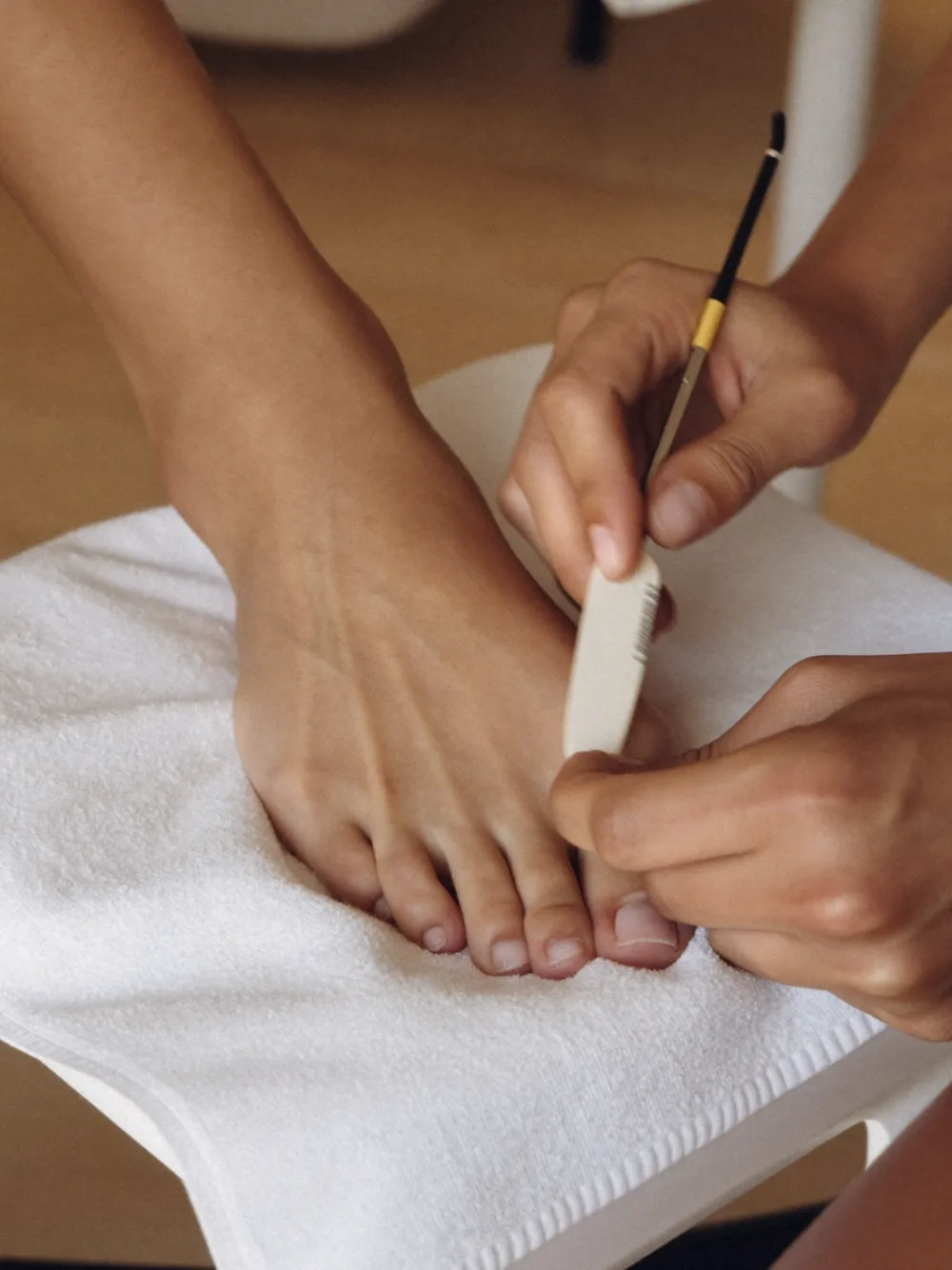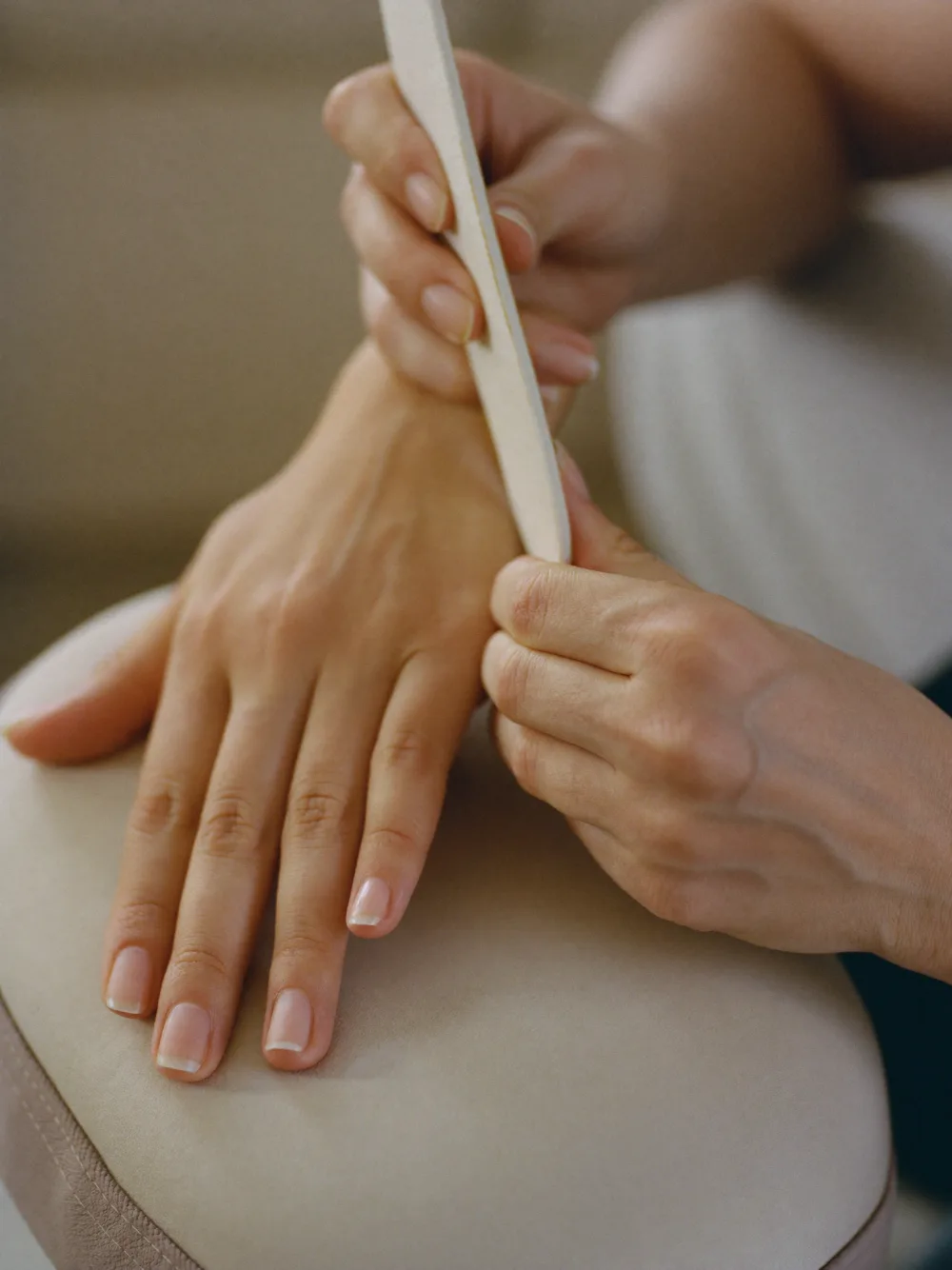
A manicure is more than colour. It is time to look closely at the hands, refine the nail shape, and choose a finish that feels like you.
What it is
Reasons for booking vary: some people want regular upkeep of their nails, others want to correct an uneven shape or nails that look rough on the surface, and others need their hands looking presentable for a specific event (a wedding, an interview, a holiday). The common thread is a well-groomed finish, not a medical goal. At Anaël, Manicure is approached as one considered part of a wider care routine.
Common goals
Reasons for booking vary: some people want regular upkeep of their nails, others want to correct an uneven shape or nails that look rough on the surface, and others need their hands looking presentable for a specific event (a wedding, an interview, a holiday). The common thread is a well-groomed finish, not a medical goal.
Who it may suit
It can suit both people who already care for their nails at home and want a more precise finish, and people who have never had a professional manicure. It's also common among people whose hands are heavily exposed through work or daily life and who would rather leave that care to someone experienced.
Treatment areas
The work focuses on the hands: the nail plate itself, the cuticle, and the skin around each finger. It doesn't include treatment of the rest of the arm or body exfoliation; Anaël offers those as separate services.
What a typical appointment looks like
The appointment usually starts with a quick check of your nails and, if you're wearing polish, its removal. From there, the team shapes and files the nails, works on the cuticle, and applies the finish you choose from what's available at the salon that day. If you're interested in combining it with a pedicure, you can ask about that when booking.
What you might feel
It's a comfortable, relaxing treatment for most people: you sit with your hands resting while the team works, and it's often a good moment to switch off. Sensitivity can vary slightly if your cuticles are drier or your nails more fragile, but it isn't a procedure generally described as uncomfortable.
Preparation
No special preparation is needed. You can arrive with any previous polish already removed if you prefer, though the team can also remove it at the salon. If you have a particular color or finish in mind, deciding beforehand helps things move faster, though final availability depends on what's in stock that day.
Aftercare
In the first few hours it's best to avoid knocks or heavy pressure on freshly treated nails, especially if polish has been applied, so it doesn't smudge or lift before it's fully dry. Beyond that, there's no special aftercare to follow.
It's most common to notice nothing in particular. If the cuticle has been worked on in depth, there can be brief, localized sensitivity in that area for a while, which usually settles on its own fairly quickly.
A treatment adapted to you
Manicure is not presented as a one-size-fits-all formula. The appointment starts with a clear conversation about your priority and the kind of care you are looking for.
If you are deciding between Manicure and another option, the Anaël team can help you compare them before you book.
Alternatives at Anaël
If you're only interested in caring for your hands, a manicure works perfectly well on its own. Many people combine it with a pedicure, also available at Anaël, to cover both hands and feet in the same visit or in nearby visits; others prefer to keep them separate depending on how much time they have each time. Neither option is better than the other — it depends on what you're looking for.
Common reasons to consult
It's often considered when nails have an uneven shape, cuticles have been neglected, or hands simply haven't had any attention in a while. It's also a frequent choice ahead of a specific event or when starting a more regular care routine.